

Why Your Sidemount Cylinders Are Floating (And What It Means)
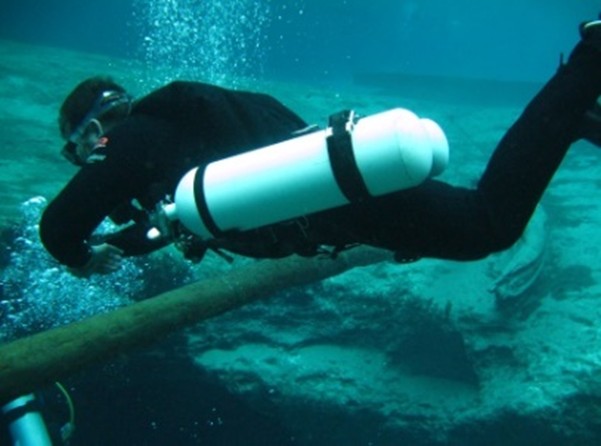
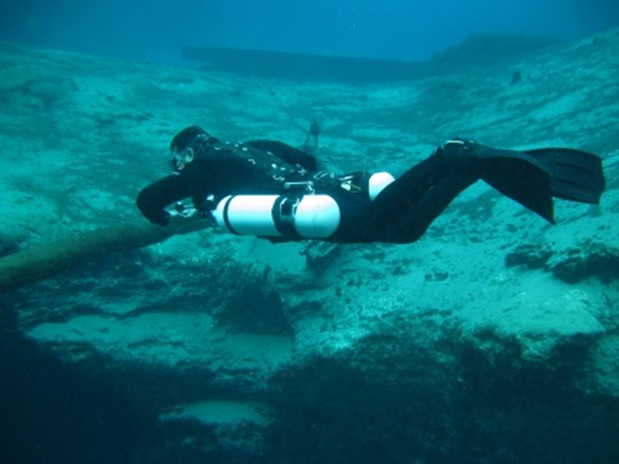
In a clean sidemount configuration, cylinders remain parallel to your torso.
The valve sits comfortably in the armpits within reach while the lower portion of the cylinder tracks along your body. The system remains streamlined and stable throughout the dive.
When tanks begin floating away from the body, it usually means that one or more configuration elements are not working together properly.
Harness Geometry
Cylinder Attachment Points
Bungee Routing
Buoyancy Distribution
Why Small Configuration Changes Make a Big Difference
A Clean Sidemount Profile
Dialing In Your Sidemount Configuration
Free PDF Download
Download The 10 Most Common Sidemount Configuration Mistakes and learn how to improve trim, streamline your equipment, and avoid the setup errors that frustrate many sidemount divers.
Get the Free Guide →
✓ Includes Configuration Checklist
✓ Includes Self-Assessment Worksheet
✓ Instant Download
Signs Your Sidemount Tanks Are Out of Trim
- cylinders floating above your shoulders
- valves hanging where you can see them
- tanks drifting away from the body
- cylinders hanging below the hips
- cylinders floating above the hips
- constant need to adjust buoyancy
Common Causes of Floating Sidemount Cylinders
Several factors influence how cylinders behave underwater.
Harness Geometry
The harness determines where cylinders attach to your body. If attachment points are positioned incorrectly, cylinders may pivot away from you rather than staying aligned.
Even small differences in harness geometry can dramatically affect cylinder stability.
Cylinder Attachment Points
Where cylinders connect to the harness plays a major role in how they remain positioned during the dive. Cylinder buoyancy problems are often related to improper attachment points. Proper Sidemount Cylinder Rigging can eliminate this problem.
If attachment points are positioned too far forward or backward, cylinders may rotate outward or drift away from your body.
Proper placement helps keep the system streamlined and balanced.
Bungee Routing
Bungees help secure the top of each cylinder close to your body.
When the routing of the bungee system is not optimized, cylinders may not stay tucked in place during the dive. Instead, they begin floating away from your profile.
Many divers focus only on bungee tension, but routing and anchor points are often more influential.
Buoyancy Distribution
Gas consumption gradually changes the buoyancy of each cylinder during the dive.
A balanced sidemount configuration allows these changes to occur smoothly without dramatically affecting cylinder alignment.
If the system is not balanced properly, cylinders may shift position as buoyancy changes.
Why Small Configuration Changes Make a Big Difference
One of the surprising aspects of sidemount diving is how sensitive the system can be to small adjustments.
Minor changes in harness position, cylinder attachment points, or bungee routing can dramatically improve stability in the water.
Because of this, experienced sidemount divers often refine their configuration gradually over time rather than attempting to solve everything in a single adjustment.
A Clean Sidemount Profile
When sidemount configuration is working correctly, cylinders remain streamlined alongside your body and require very little attention during the dive.
You maintain a stable horizontal trim, propulsion remains efficient, and equipment management becomes intuitive rather than distracting.
Achieving this balance is the result of careful configuration rather than equipment alone.
Dialing In Your Sidemount Configuration
Understanding the underlying causes of floating cylinders helps you move beyond simple trial and error. It’s a very involved process that is addressed in several chapters of the Sidemount Diving Guide. For divers who want to eliminate common configuration problems and refine their sidemount system, the book walks through the entire process in detail.
If you found this article helpful, you can receive $10 off the book Sidemount Diving or $5 off the book Recreational Sidemount Diving when purchasing directly from the website.
Use code FLOATY10 for the Sidemount Diving Guide and FLOATY5 for the Recreational Sidemount Diving Guide during checkout.
Free PDF Download
Enjoyed this article?
Download The 10 Most Common Sidemount Configuration Mistakes and get the configuration checklist and self-assessment worksheet.
Get the Free Guide →
✓ Includes Configuration Checklist
✓ Includes Self-Assessment Worksheet
✓ Instant Download
Related Articles
Sidemount Cylinder Rigging: What Matters Most
Sidemount Stage Rigging for Cave Diving
The Anatomy of a Sidemount Configuration
How to Trim Out in Sidemount
Why You Can’t Stay Horizontal in Sidemount (And How to Fix It)
Return to The Complete Guide to Sidemount Diving Configuration